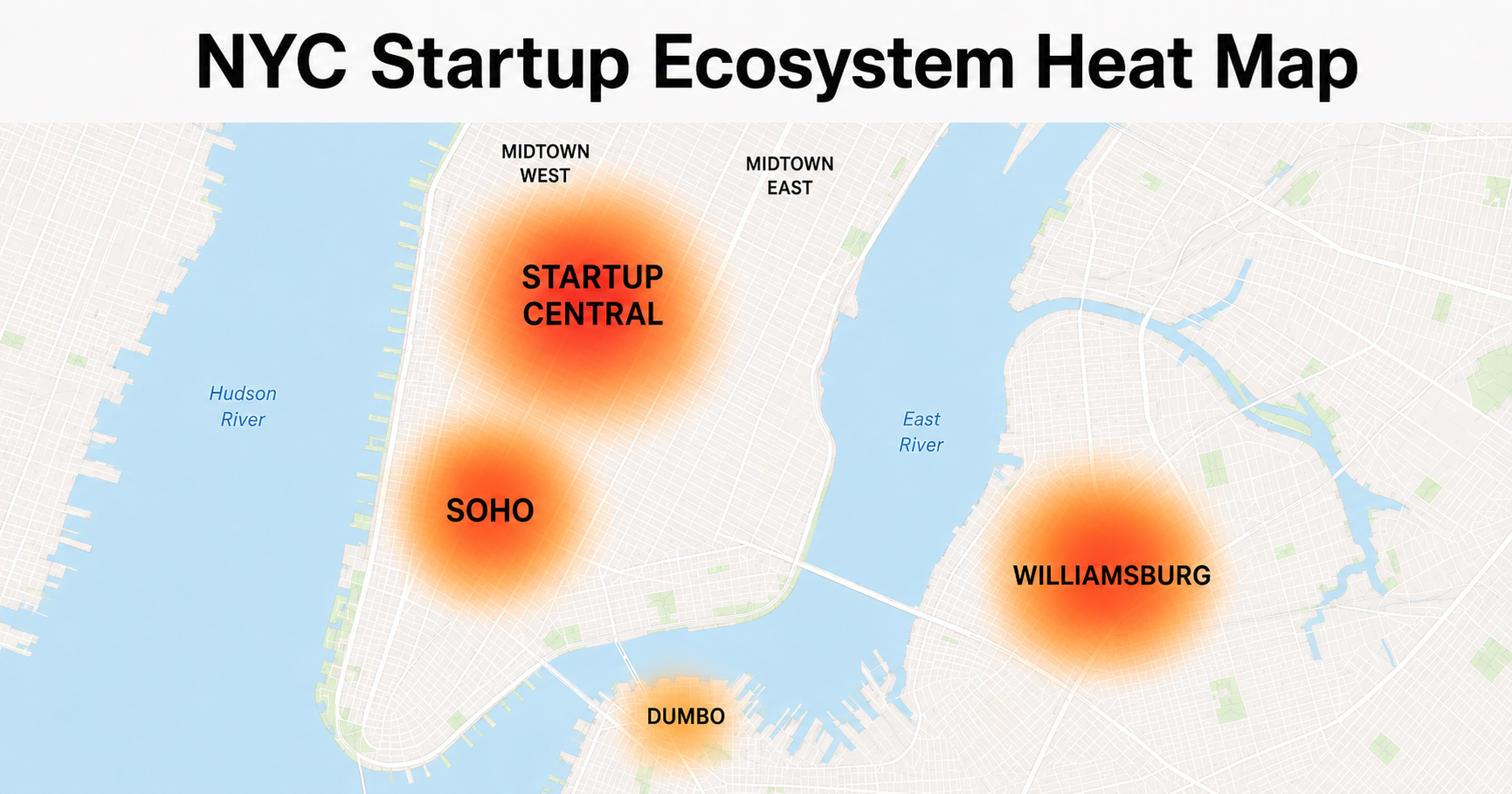
New York does not have one startup district. It has a connected set of nodes, each with a different mix of capital, talent, company-building activity, and social infrastructure.
Startup Central
The corridor around Flatiron, Union Square, Chelsea, and adjacent parts of Midtown remains the ecosystem's center of gravity. It combines founders, venture firms, enterprise buyers, experienced operators, and the city's densest calendar of startup activity.
SoHo and lower Manhattan
SoHo brings together consumer, fintech, commerce, design, and creative technology. Its importance is not only the companies headquartered there, but the density of meetings, events, hospitality, and informal collision space.
Williamsburg
Williamsburg has become a meaningful founder and technical-talent node, especially for younger companies and operators whose work sits between software, culture, media, consumer products, and emerging technology.
DUMBO
DUMBO is smaller but strategically distinct. It combines Brooklyn's creative and technical talent with proximity to lower Manhattan, established technology companies, and waterfront spaces that support events and community gathering.
The real advantage of New York is not one neighborhood. It is the speed at which people, capital, customers, and ideas move between these nodes.
Why IRL still matters
Startup ecosystems are built through repeated interaction. Dinners, salons, demo nights, coworking spaces, and informal introductions create trust and distribution that online networks rarely reproduce on their own.
That makes physical density part of New York's product. The map will evolve as new companies, communities, and gathering points reshape where the ecosystem actually happens.